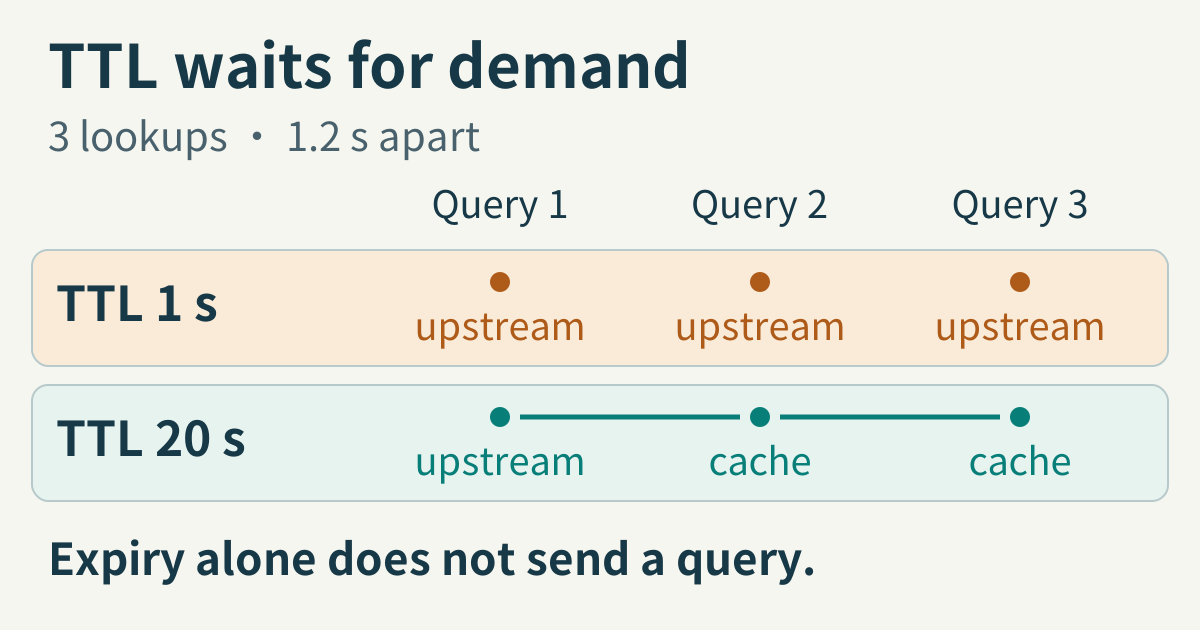
Three lookups separated by 1.2 seconds contact the authority three times at TTL 1 and once at TTL 20 in the article example. Expiry alone does not schedule a query.

DNS TTL trades repeated upstream queries against retained answers

A DNS TTL is a lifetime attached to cached data, not a refresh job scheduled for every second. A cache can reuse a valid answer while it retains that entry. After expiry, a subsequent request usually requires fresh resolution unless another configured behavior applies. An idle record need not produce an upstream query merely because its TTL has reached zero. ...
March 1, 2028 · 6 min · XB Field Notes
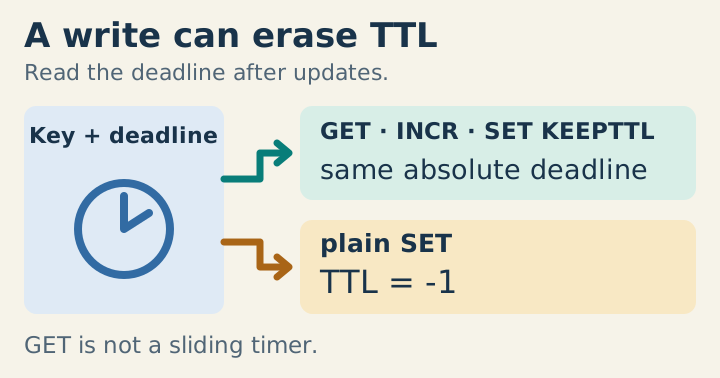
A key with an absolute deadline branches into two command paths. GET, INCR and SET KEEPTTL keep that same deadline; plain SET clears it and leaves TTL -1. Reads do not renew the deadline.

Redis TTL lets every key carry its own clock

Redis expiration answers when a key should stop being available, not how much memory the server may consume. A deadline belongs to the key, and later commands can preserve, replace, or remove it. Reliable TTL use therefore requires testing update paths as well as the initial insertion. A successful write alone says nothing about the deadline remaining afterward. ...

June 29, 2027 · 6 min · XB Field Notes
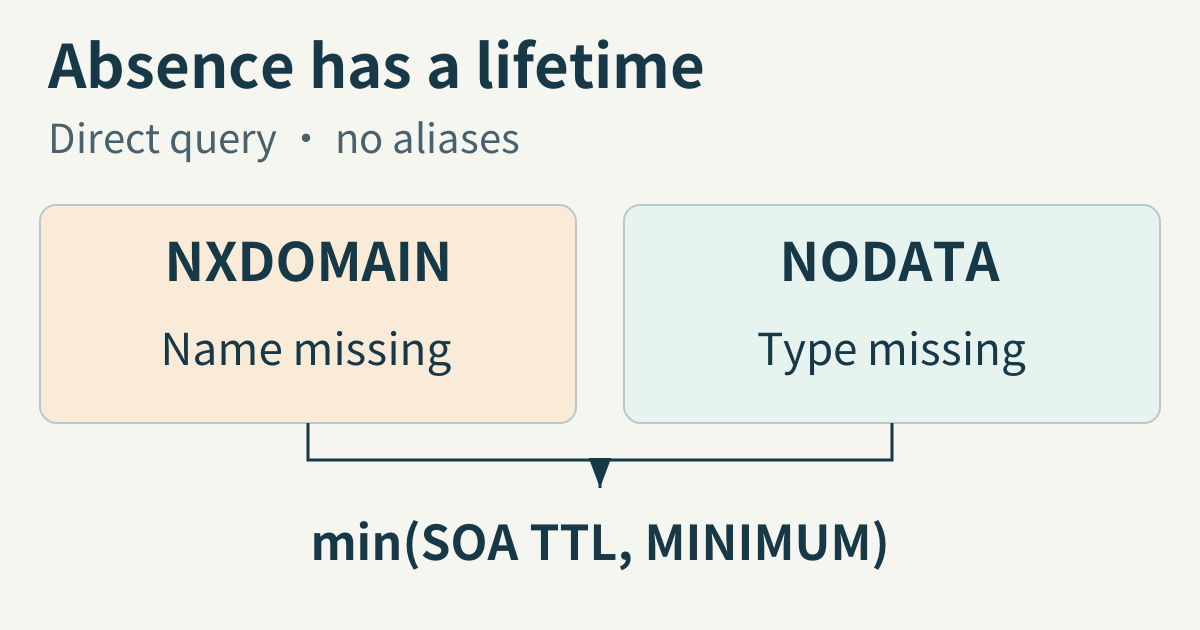
For a direct query without aliases, NXDOMAIN means the name is missing, while NODATA means the requested type is missing. Authoritative negative lifetime is the smaller of SOA TTL and MINIMUM.

Negative DNS answers preserve absence until their cache lifetime expires

DNS can return useful information by saying that data is absent. NXDOMAIN reports a name error; NODATA describes a successful response without the requested record type. In a direct query without aliases, these distinguish a nonexistent name from an existing name that lacks the requested data. Caching those results avoids repeating the same unsuccessful upstream lookup for every client request. ...

October 22, 2026 · 6 min · XB Field Notes