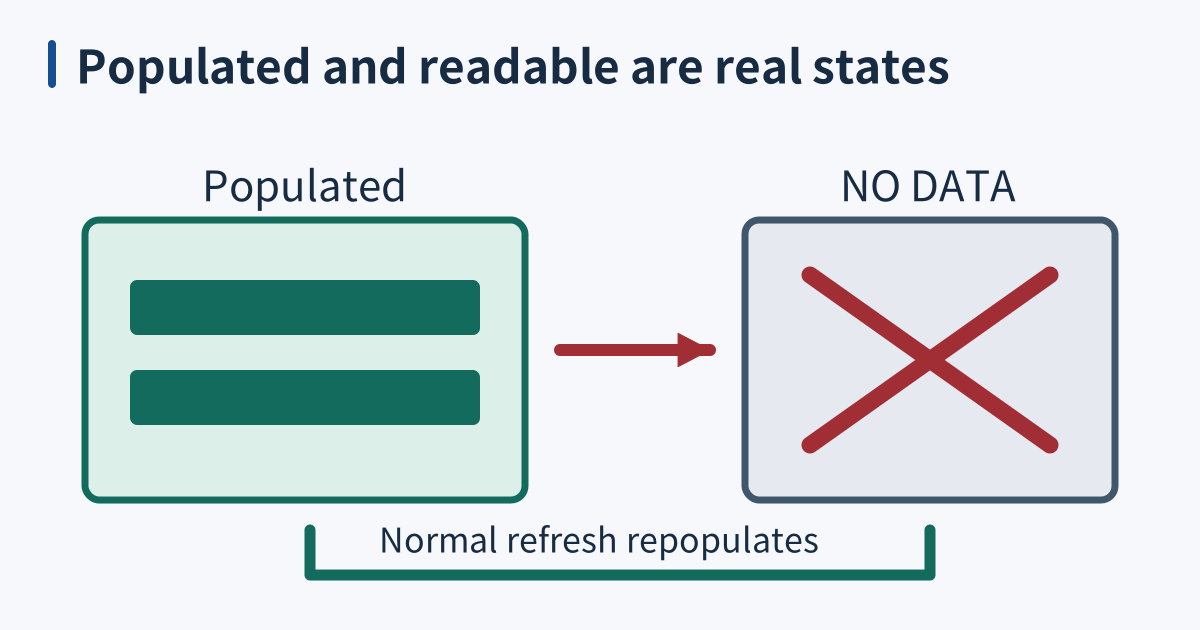
A populated view holds two solid row bars; WITH NO DATA points to a crossed empty block, and a separate normal-refresh return path repopulates it.

A materialized view stores a query's result for reuse

A materialized view stores the result of a defining query so later reads can access those stored rows. It moves computation from every read into refresh operations, which can benefit repeated reporting queries. The tradeoff is an explicit freshness boundary and another relation to maintain; neither instant reads nor automatic synchronization with the source tables is guaranteed. ...
April 26, 2027 · 5 min · XB Field Notes
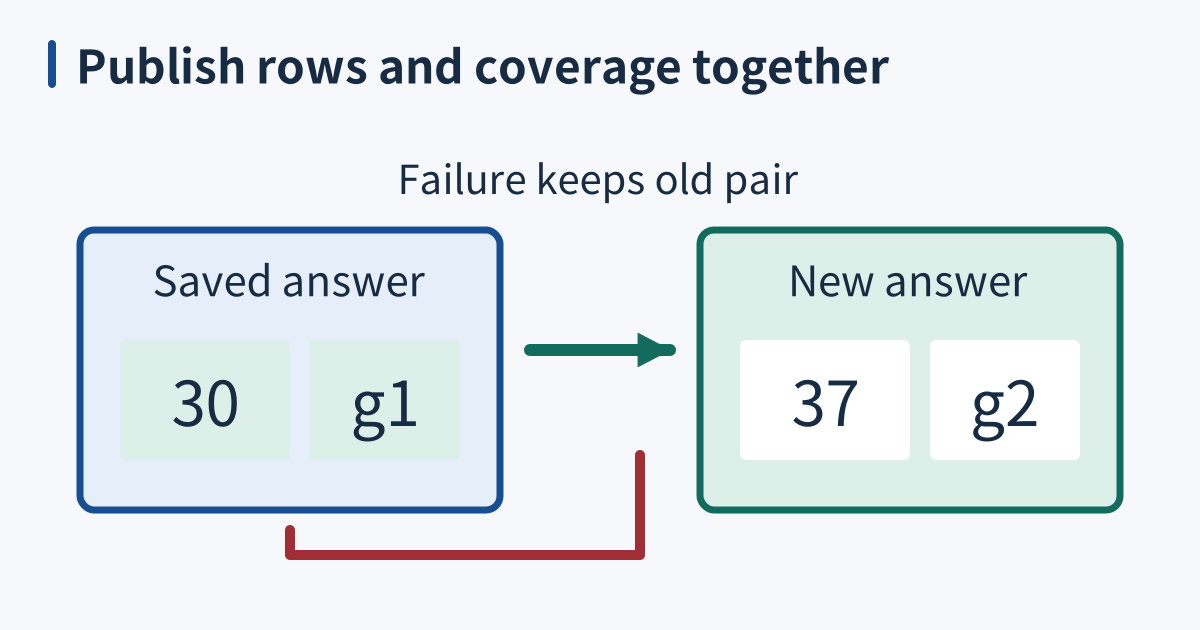
An old saved-answer pair of east thirty and generation one connects to a new pair of east thirty-seven and generation two; a failed-refresh return path loops to the old pair.

Materialized answers need freshness and cost budgets

A materialized answer saves repeated computation by storing a query result. The decision is economic and semantic: how much work will reuse avoid, and which source state may readers accept? This article focuses on that budget. PostgreSQL’s native materialized-view lifecycle has additional prerequisites; a stored answer should never acquire a freshness promise merely because its reads are fast. ...

October 16, 2026 · 5 min · XB Field Notes