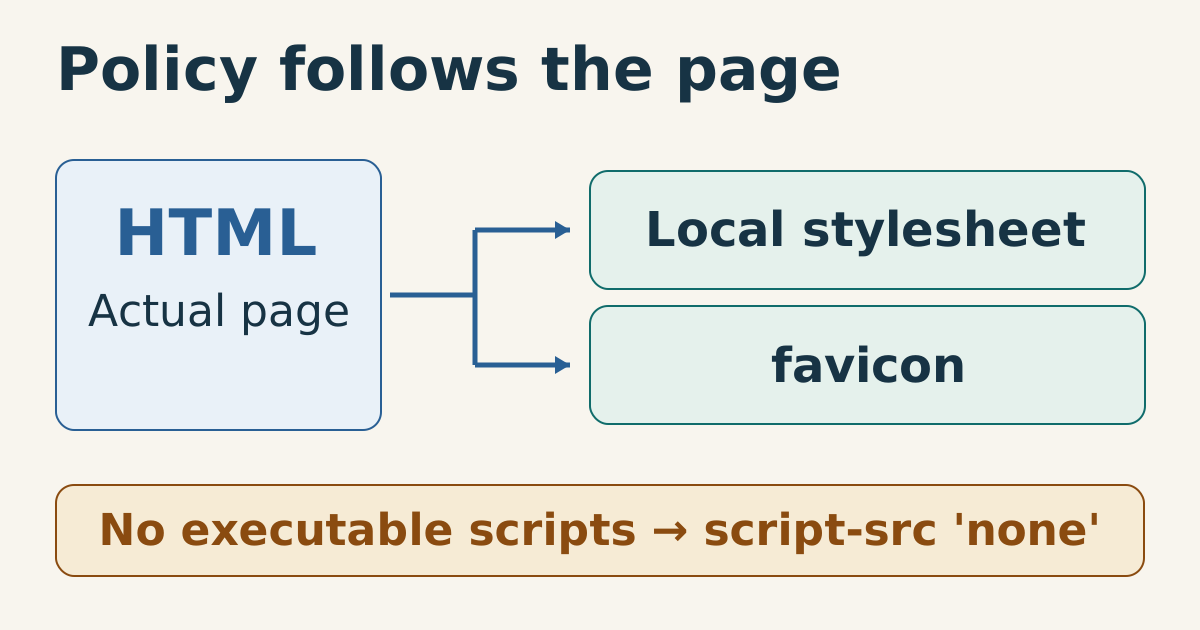
An HTML page loads a local stylesheet and favicon. script-src none is appropriate only when no executable scripts are needed.

Security headers should describe the actual page

Start with a narrow policy, then expand it only when a documented feature needs another resource.
July 23, 2026 · 3 min · XB Field Notes
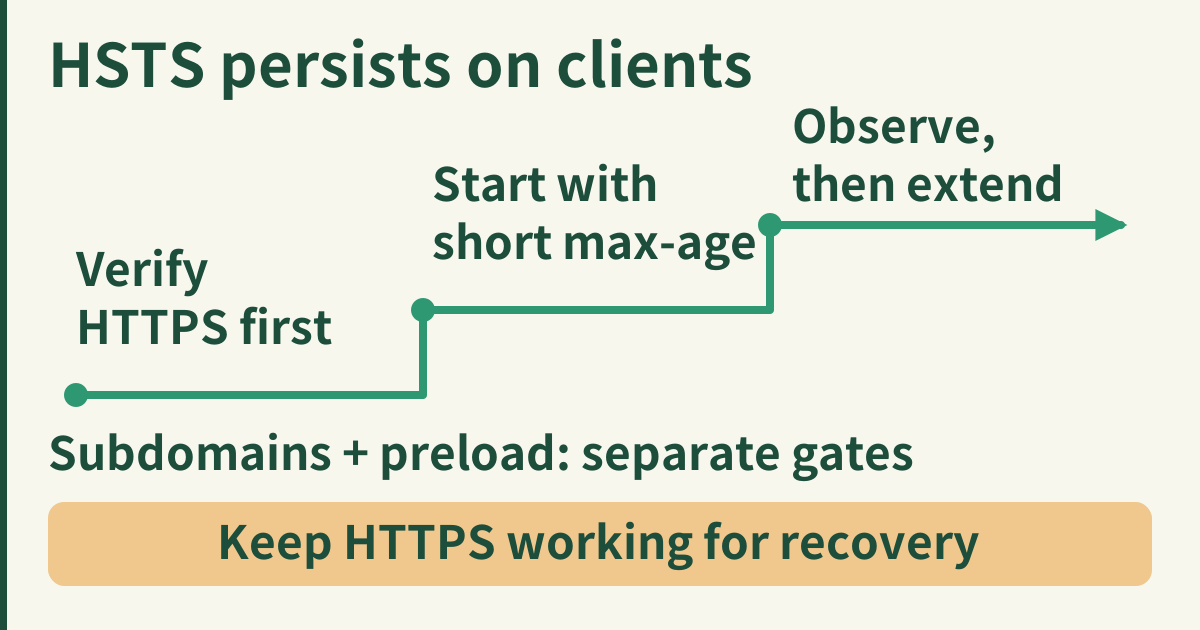
Verify HTTPS, begin with a short HSTS lifetime, then observe before extending it. Subdomain scope and preload need separate decisions; recovery requires working HTTPS.

HSTS should be rolled out with a recovery plan

HSTS is cached browser policy, so a configuration mistake can outlive the server change that created it.
June 23, 2026 · 3 min · XB Field Notes
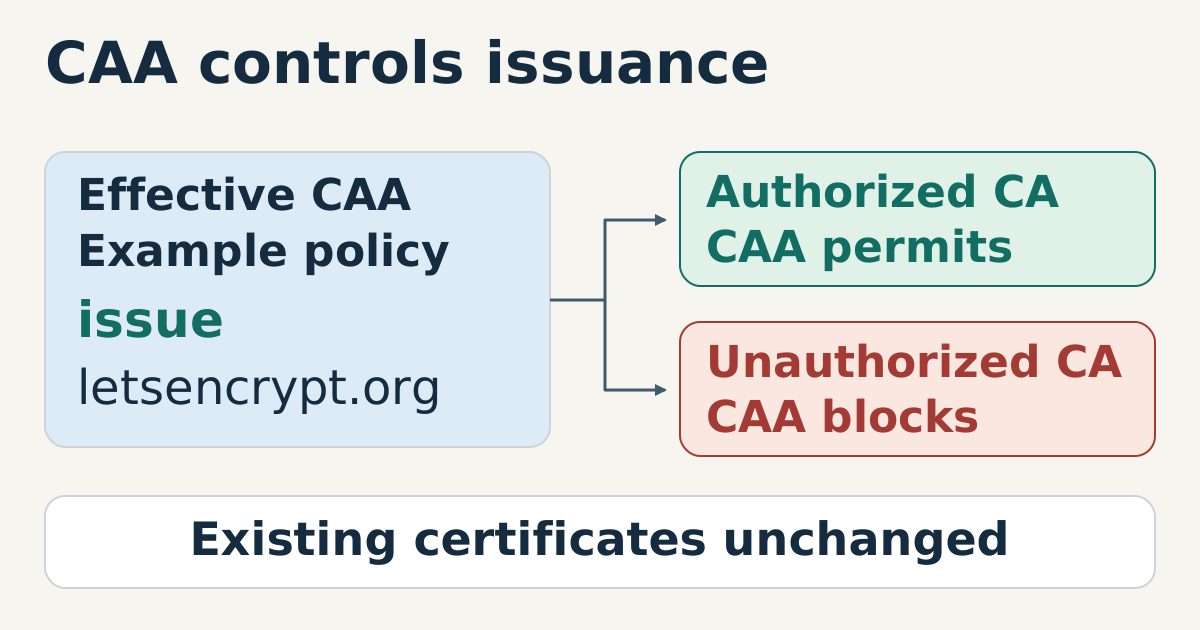
An illustrative effective CAA policy, issue letsencrypt.org, branches into CAA permits for an authorized CA and CAA blocks for an unauthorized CA. Existing certificates are unchanged.

CAA records should authorize the issuer you actually use

CAA narrows certificate issuance policy, but a mistaken record can block renewal as effectively as an expired certificate.
June 17, 2026 · 2 min · XB Field Notes
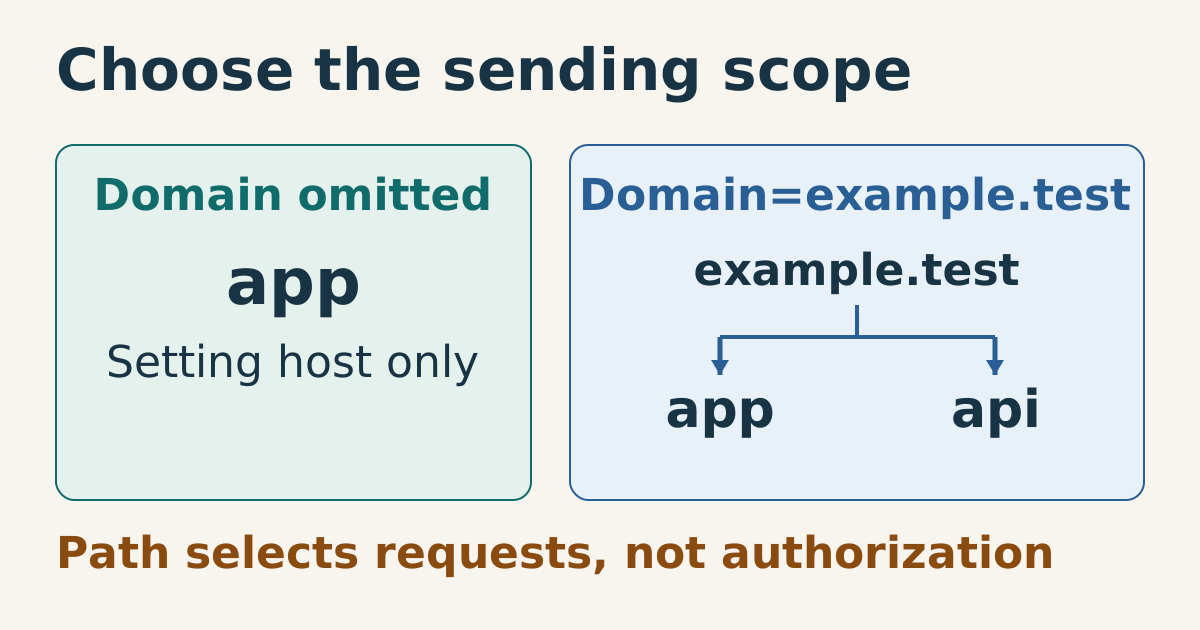
Omitting Domain keeps a cookie at its setting host. Domain=example.test broadens eligible destinations to that domain and eligible subdomains such as app and api. Path selects requests and is not authorization.

Cookie scope should be narrower than the application boundary

A cookie sent to more hosts or paths than necessary enlarges the impact of every mistake at those boundaries.
June 15, 2026 · 3 min · XB Field Notes
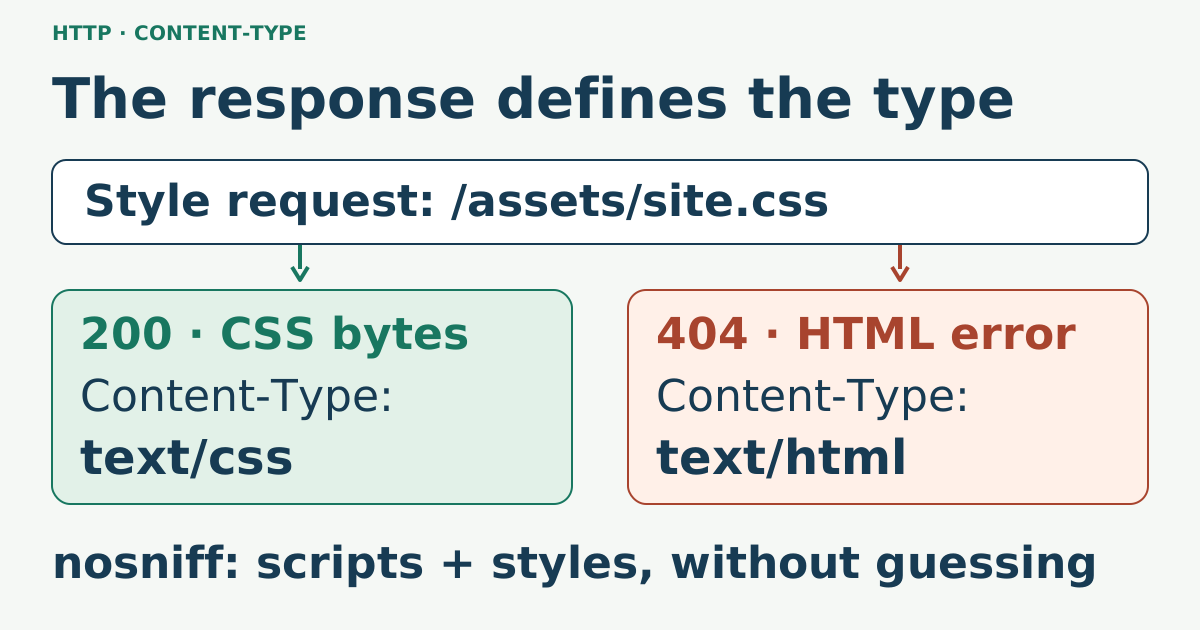
A style request for /assets/site.css branches into schematic responses: 200 with CSS bytes declared text/css, or 404 with HTML bytes declared text/html. Nosniff is scoped to script and style destinations.

Content-Type should describe the bytes you actually send

A filename is only a hint; the response header is the browser-facing contract for the representation.

June 11, 2026 · 3 min · XB Field Notes