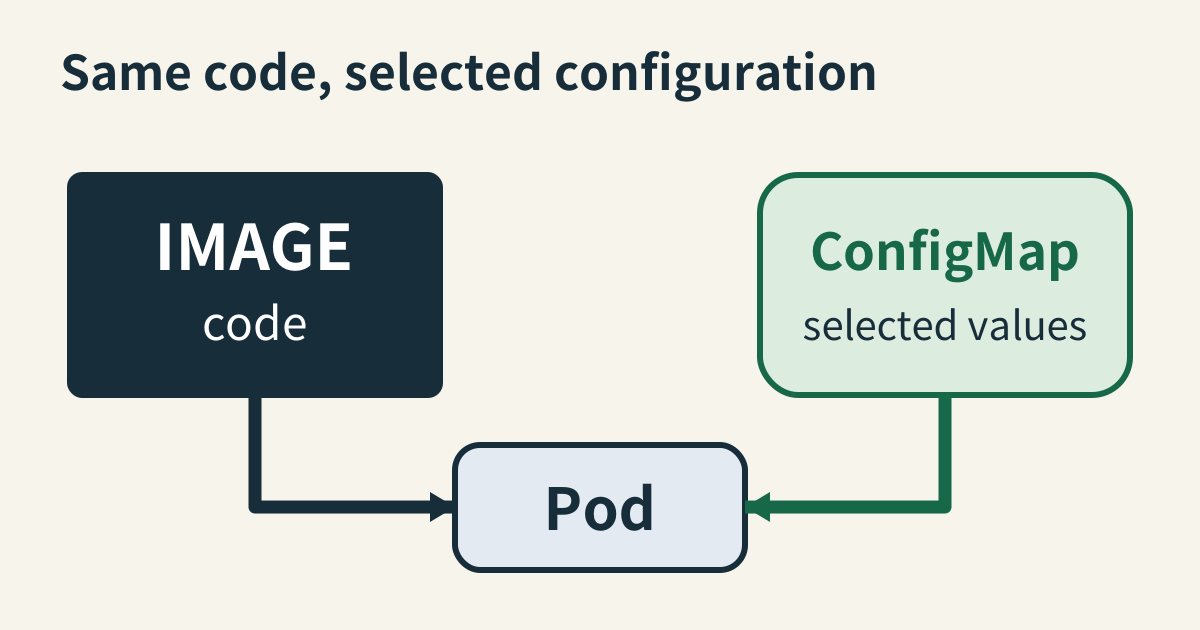
Image code and selected ConfigMap values independently feed a Pod. The workload definition identifies both inputs.

ConfigMaps separate configuration from the image

A ConfigMap stores non-confidential configuration separately from an image. That lets a release change an environment-specific value without rebuilding the application artifact. The useful boundary is explicit: the image supplies code, while the workload definition identifies which configuration that code should consume. A release is therefore more than an image tag; its configuration reference is part of the behavior being deployed. ...

August 20, 2027 · 6 min · XB Field Notes
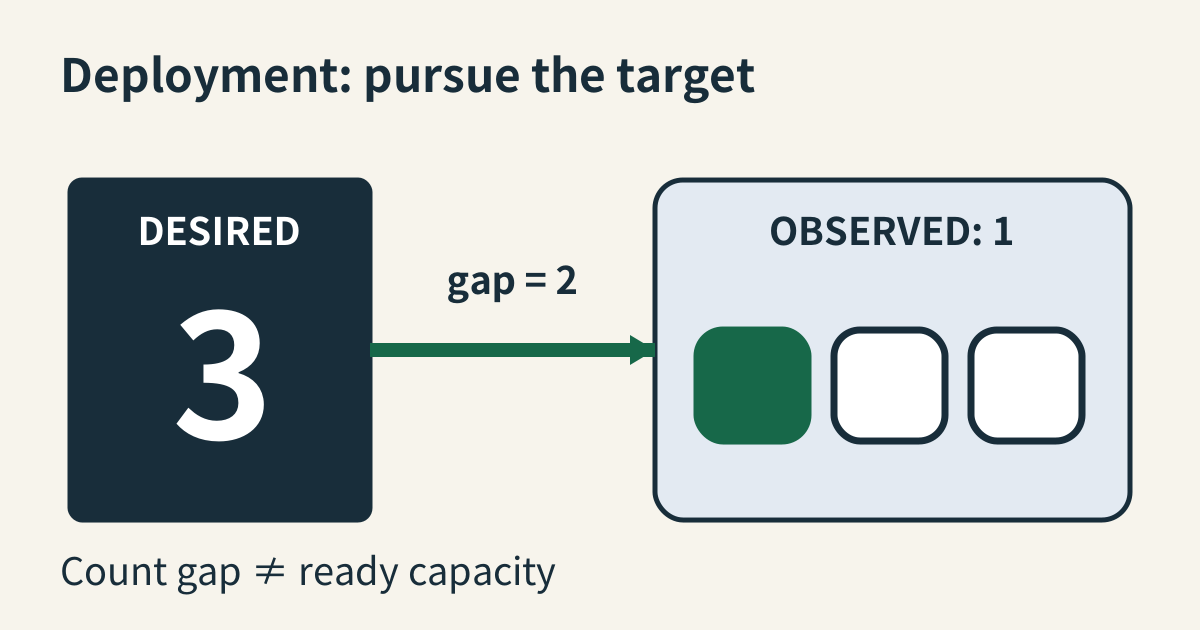
Desired three beside one observed unit and two missing count positions. The arrow compares a target with a count gap, not ready capacity.

Kubernetes Deployments describe desired state

You describe the end state, not the steps. That idea underlies replicas, updates, and rollback: the cluster keeps working to match your description. The count sequences describe the article’s local arithmetic model. Real controllers have separate responsibilities and asynchronous failure modes. Historical model passes are unchanged; no example was rerun. Spec beats imperative steps A Deployment is a statement of the end state, not a list of steps: how many replicas, which image, what update strategy, which labels. The operator publishes the what, and the controller, a reconcile loop, is responsible for the how. The distinction is resource ownership, not whether a shell command was used. kubectl run normally creates a standalone Pod; its kubelet can restart containers, but no ReplicaSet maintains a replacement population after that Pod disappears. A Deployment can itself be created with a command, yet its stored specification continues guiding controllers after the client exits. Interrupting the client does not reliably indicate whether the API accepted the request: inspect the stored object before retrying or diagnosing convergence. ...
August 19, 2027 · 5 min · XB Field Notes
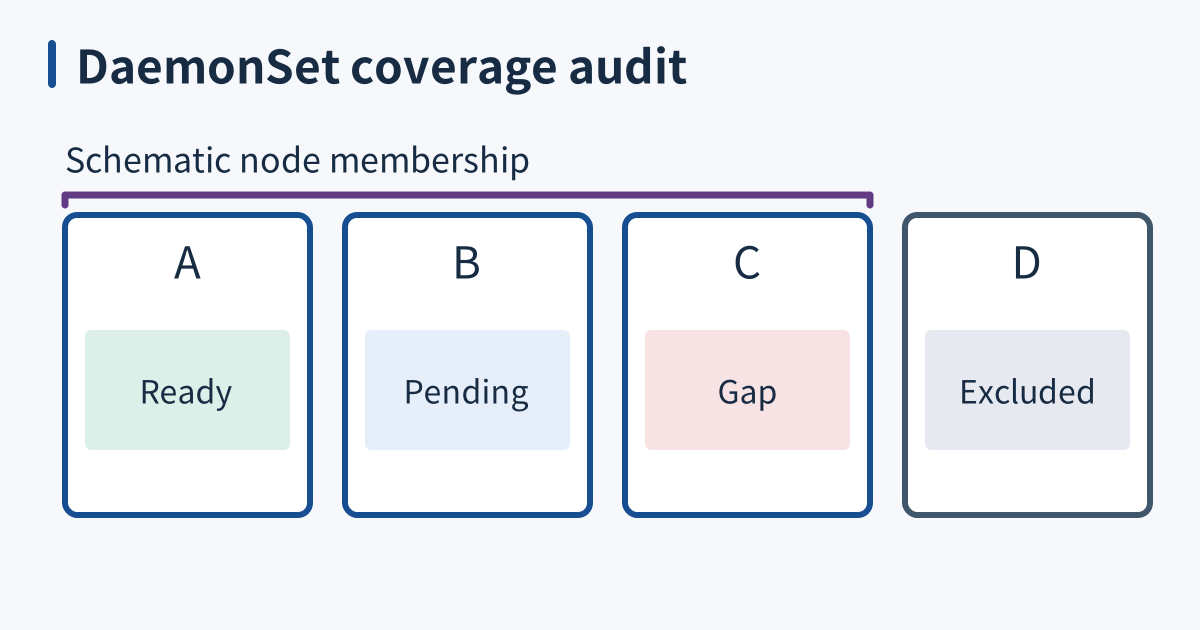
Schematic nodes A, B and C are intended for coverage: A is Ready, B Pending and C a gap; D is intentionally excluded.

A DaemonSet puts one Pod on every eligible node

A Deployment targets a replica count; a DaemonSet targets coverage of eligible nodes. That is useful for node-level log collectors, network agents, and device plugins. A newly eligible node creates reconciliation work, not an immediate guarantee that its agent is running or ready. Selection rules, scheduling, image pulls, startup, and node health can all delay useful coverage. ...

March 29, 2027 · 6 min · XB Field Notes
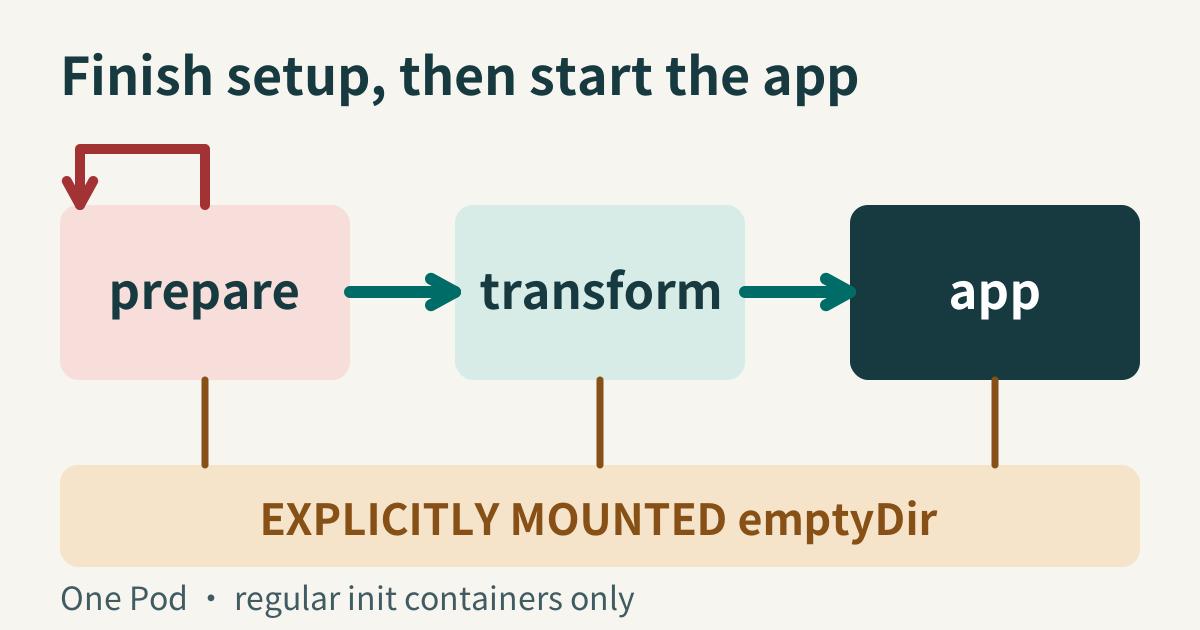
Within one Pod a regular prepare init retries, then transform completes, then the application starts; all mount the same emptyDir.

Regular init containers establish startup prerequisites

A regular init container performs setup before a Pod’s application containers start. It has its own command, image and filesystem view, and can mount a volume that the application later reads. This separates a prerequisite from the main process, but does not make arbitrary setup safe or automatically bounded. Design the step around its actual retry behavior and the lifetime of its output. ...

January 3, 2027 · 6 min · XB Field Notes